
Office Address
Email Address
By the Al Karama Technical team · Updated November 2026 · 9 min read
A washing machine that won’t drain or spin usually has a blocked pump filter, a kinked or clogged drain hose, a blocked sink trap or standpipe, or a jammed drain pump. Siemens notes that fluff, buttons and coins can block the drain, and that the impeller in the drain pump must be able to turn. Most machines won’t spin while water is still inside, so a drain fault often looks like a spin fault. If the filter and hose are clear and the machine still won’t drain, the pump, a sensor or the control board needs a technician.
You open the door at the end of a cycle and find soaking clothes sitting in a pool of water. Or the machine reaches the spin, hums, and never speeds up. Drain and spin faults are among the most common reasons people call for washing machine repair in Dubai, and many of them start with a part you can reach without any tools. This guide explains why it happens, how to drain the machine safely, and when the problem needs a technician.
Water leaves the drum through a short path: the sump at the bottom of the tub, the pump filter, the drain pump, the drain hose and finally the standpipe or sink trap. A blockage or failure anywhere along that path leaves water in the drum. These are the causes we find most often in Dubai homes:
| Cause | What you notice | Usual fix |
|---|---|---|
| Blocked pump filter | Water left in the drum, a humming pump | Clean the filter behind the bottom flap |
| Kinked or squashed drain hose | Slow draining after the machine was moved | Straighten the hose and pull the machine out a little |
| Blocked sink trap or standpipe | Water backs up into the sink or the drum | Clear the trap or the standpipe |
| Object jammed in the pump | A loud buzz, then silence, no draining | Remove the object from the pump housing |
| Failed drain pump | No sound from the pump, or a hum with no flow | Replace the pump |
| Pressure sensor fault | The machine thinks it's still full, or shows a drain error | Test and replace the sensor |
| Control board fault | A drain error with every part testing fine | Repair or replace the board |
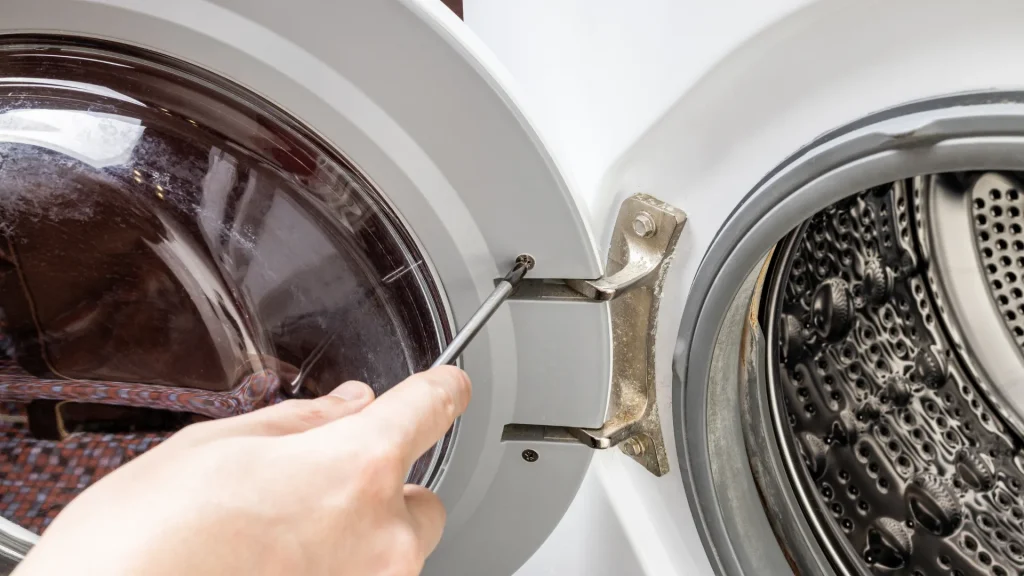
A spin fault and a drain fault are often the same problem. Most front-loaders check the water level before spinning, and if water is still inside, the spin won’t start. Once you’ve ruled out draining, these are the usual causes:
If the drum is full of water, drain it before you do anything else. Siemens’ own advice starts the same way: close the water supply, switch the machine off, unplug it and let hot water cool down first.
Expect more water than you think. A full drum holds several litres, so drain into a tray in stages and keep towels ready. Never open the filter while the machine is running or the water is hot.
If the filter is clean but water still won’t leave, look behind the machine. Pull it out carefully and check the drain hose for kinks, especially if the machine was pushed back after cleaning. The end of the hose should hook into a standpipe or connect to a sink trap, not be pushed deep into the pipe, because that can cause siphoning or slow draining.
Disconnect the hose from the sink trap and check both for blockages. Siemens notes that fluff, buttons and coins can block the siphon, and kitchen sinks that share a trap with the washer collect grease and food as well. Rinse the hose through and clean the trap connection before refitting the hose with its clip.
In Dubai flats, washing machines often sit under kitchen counters and share a drain with the kitchen sink, so grease and food scraps meet lint from the laundry. Sand comes in on beach towels and work clothes, coins and hair clips are left in pockets, and scale from hard water stiffens the pump over time. In older buildings, slow building drains can also push water back into the machine.
Brand matters too. Front-loaders from Bosch, Siemens, LG and Samsung all have a filter at the bottom front, but its exact position and the emergency drain hose vary. Our Bosch washing machine repair Dubai team clears blocked pump filters on these models every week.
| Brand | Codes you may see | What they usually mean |
|---|---|---|
| Siemens and Bosch | E:18 or F:18 | A drain problem, covered on Siemens' drain help page |
| LG | OE and UE | OE is a drain fault, UE an unbalanced load |
| Samsung | 5E, 5C or SE, and UE or Ub | A drain fault, or an unbalanced load |
Codes vary between models, so check the manual for yours. A drain code that comes back after you’ve cleaned the filter and the hose usually means the pump or a sensor needs testing.
The drain pump is a small electric motor with a plastic impeller that pushes water out of the machine. A coin, an underwire or a hair clip can jam it, and the pump then buzzes without moving any water. If the pump stays silent, its coil may have burnt out, or it isn’t getting power from the board. It helps to know the signs your washing machine drain pump is failing before it stops completely.
A technician tests the pump’s resistance, checks the wiring and the connector, confirms the board is sending power and replaces the pump if it has failed. On most machines this is a first-visit repair, because common pumps travel in the van.
| Part | Sign | What the technician does |
|---|---|---|
| Carbon brushes | Weak spin, sparking or a burning smell from the motor | Checks brush length and replaces both brushes |
| Drive belt | The motor runs but the drum barely moves | Refits or replaces the belt |
| Motor | No drum movement at all | Tests the windings and replaces the motor if faulty |
| Speed sensor | The drum starts, then stops before the spin | Tests the sensor and its wiring |
| Door lock | No spin, or a door lock error | Tests and replaces the lock |
| Drum bearings | A loud rumble or grinding on spin | Replaces the bearings, which means taking the drum out |
Drain pumps, filters, belts, brushes and door locks are usually worth repairing, even on older machines, because the parts are common and the job is quick. Bearings and control boards cost more, so on a budget machine that’s many years old it’s worth comparing the repair with the price of a new one. A good technician tells you which way they’d go and why, then leaves the choice to you.
The technician drains the machine safely if it’s full, checks the filter, the hose and the sink trap, then tests the pump, the pressure sensor, the door lock, the motor and the board until the cause is clear. You get the fault in plain words and a fixed price before any work starts. We cover the whole city, including washing machine repair in Dubai Marina towers, and most drain and spin repairs are finished on the first visit.
We fix drain pumps, hoses, brushes, belts and boards on all major brands, usually the same day. Book a washing machine repair near me visit, or call or WhatsApp us now.
Usually the pump filter is blocked, the drain hose is kinked or the sink trap is clogged. Clean the filter and check the hose before calling a technician.
An unbalanced load, too much detergent or a low-spin programme are the usual causes. If those are fine, the brushes, belt, motor or speed sensor may need testing.
Unplug it, turn off the tap, put a tray under the bottom front flap and drain through the emergency hose or by slowly unscrewing the filter.
About once a month in most homes, and more often if you wash sandy towels, work clothes or pet bedding.
Yes. Extra suds cushion the drum, and many machines reduce or skip the spin until the suds are gone.
The drain pump is probably jammed by an object or has failed. Check the filter and the pump housing for coins or clips first.
Yes, if the machine is unplugged and the water has cooled. Drain slowly into a tray and keep towels ready.
Usually, yes. Common drain pumps are carried in the van, so most pump replacements are finished on the first visit.
Same-day visits in most areas and a fixed price before any work starts.
Fully licensed, bonded, and insured for your protection.
WhatsApp us