In the heart of bustling residential and commercial districts like Al Karama, Dubai, the kitchen is the undisputed hub of daily activity. Whether you are running a busy bakery in Sheikh Hamdan Colony, managing a commercial restaurant kitchen, or preparing family meals at home, a reliable oven is essential. From roasting meats to baking delicate pastries, your oven handles heavy daily workloads and high thermal stress.
When an oven suddenly stops heating, bakes unevenly, or refuses to turn on entirely, your meal preparation comes to an abrupt halt. Dealing with a malfunctioning cooking appliance requires more than guesswork—it demands systematic electrical diagnostics, precise temperature calibration, and expert technical intervention.
At Al Karama Technical Services, located right in Sheikh Hamdan Colony, Dubai, our certified technicians specialize in fast, affordable, and professional oven and range repairs. This in-depth guide explores advanced troubleshooting techniques, common mechanical and electrical failure points, and professional repair strategies designed to restore your cooking equipment to peak performance.
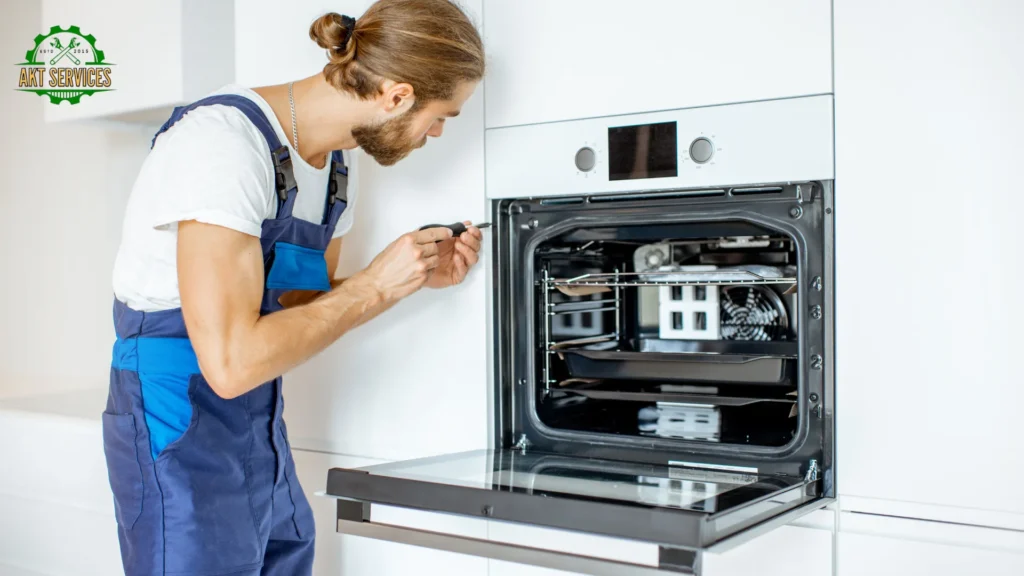
The Anatomy of Modern Kitchen Ovens: Electric vs. Gas
To effectively diagnose and repair an oven, it helps to understand its underlying architecture. While both electric and gas ovens achieve the same culinary results, their internal heating and control mechanisms differ significantly:
1. Electric Ovens
Electric ovens rely on heavy-duty resistive heating elements located at the top (broil element) and bottom (bake element) of the cavity.
- The Power Source: High-voltage alternating current (220V–240V in the UAE) flows directly through the element coils when the electronic control board or mechanical thermostat closes the circuit.
- Thermal Regulation: NTC thermistors or capillary thermostats monitor internal temperatures, cycling power to the elements on and off to maintain steady baking heat.
2. Gas Ovens
Gas ovens use natural gas or LPG burners ignited by an electronic spark igniter or a glowing hot surface igniter.
- The Power Source: A safety valve opens gas flow once the igniter reaches a high enough temperature to safely draw electrical current and ignite the burner flame.
- Thermal Regulation: Cycling safety valves regulate gas flow to maintain precise baking temperatures inside the insulated cavity.
Common Oven Failures in Dubai’s Kitchens
Operating cooking appliances in regional residential and commercial kitchens exposes electrical wiring, switches, and heating components to continuous thermal cycling, grease accumulation, and heavy usage. Recognizing early warning signs prevents unexpected kitchen disruptions:
1. Oven Fails to Heat Up (Dead Elements or Igniters)
If your oven indicator light turns on and the timer counts down, but the interior remains completely cold, you are experiencing a heating failure.
- Electric Oven Cause: A burned-out bake or broil element. Visible cracks, blistering, or bubbling along the metal tubing indicate an internal break in the electrical resistance circuit.
- Gas Oven Cause: A weak hot surface igniter. If the igniter glows orange but fails to draw enough amperage to open the safety gas valve, gas will not release and the burner will not ignite.
2. Uneven Baking and Hot Spots
If cakes rise lopsided or meats bake faster on one side than the other, your oven is suffering from temperature distribution issues.
- The Cause: A failing convection fan motor, warped oven door gaskets allowing heat to escape, or a calibration drift in the electronic temperature sensor probe.
3. Electrical Tripping and Short Circuits
Does your kitchen circuit breaker flip the moment you turn on the oven bake cycle?
- The Cause: An internal heating element has short-circuited to the metal frame, or moisture and grease accumulation inside the electronic control board is causing a ground fault.
Step-by-Step Professional Oven Repair Protocol
When basic troubleshooting fails and component replacement is necessary, professional technicians follow a rigorous repair protocol to ensure safety and precision:
1.Isolate Power and Perform Safety Checks:10 min.
Turn off the dedicated kitchen circuit breaker and unplug the appliance. Verify zero electrical potential across internal wiring terminals using a calibrated digital multimeter.
- Verification: Control panel indicators and internal lights are completely unpowered.
2.Continuity and Resistance Testing:20 min.
Disconnect wire leads from bake and broil elements. Set your multimeter to ohms (Ω) and test element resistance. A healthy element should show a low resistance value, while an “OL” reading indicates a burned-out break.
- Verification: Multimeter measurements pinpoint faulty electrical heating components.
3.Component Replacement and Wiring Inspection:30 min.
Remove mounting screws securing the failed element, safety thermostat, or gas igniter. Inspect wire terminals for heat discoloration or corrosion, and install authentic manufacturer-approved replacement parts.
- Verification: Replacement parts are securely mounted with clean, tight electrical connections.
4.Thermal Calibration and Burn-In Testing:15 min.
Power the oven back on, run a high-temperature calibration cycle, and verify interior cavity temperature using a calibrated thermocouple thermometer to ensure accurate baking performance.
- Verification: Oven reaches and maintains target temperatures accurately across all settings.
Preventative Maintenance to Extend Your Oven’s Lifespan
Taking a proactive approach to kitchen appliance care drastically reduces emergency breakdown risks:
- Wipe Spills Promptly: Clean up sugary spills and grease splatters inside the oven cavity after it cools down to prevent carbonization and element corrosion.
- Inspect Door Gaskets Regularly: Check the fiberglass or rubber door seal around the oven opening for tears or gaps that let heat escape.
- Avoid Harsh Abrasive Cleaners: Use non-abrasive cleaning pastes or specialized oven cleaners, avoiding harsh scouring pads that scratch porcelain enamel surfaces or damage wire sensors.
Professional Support with Al Karama Technical Services
While routine cavity cleaning and rack maintenance can easily be managed at home, complex electrical repairs—such as electronic control board replacements, internal wiring harness repairs, and gas safety valve servicing—require certified professional expertise.
When your residential range or commercial oven requires expert intervention, Al Karama Technical Services, located in Sheikh Hamdan Colony – Dubai – United Arab Emirates, provides fast, affordable, and professional appliance repairs across Dubai.
To review our full range of property support, explore our services. If your kitchen appliance requires prompt assistance, contact us today at +971 56 406 2749 or email admin@alkaramatechnical.com for reliable support throughout Al Karama and surrounding areas.
Frequently Asked Questions
How quickly can technicians arrive for an oven repair in Al Karama? We strive to provide rapid same-day or next-day appointments for all urgent appliance repair requests across Al Karama and surrounding Dubai districts.
Can I use self-cleaning mode frequently on my electric oven? Running high-heat self-cleaning cycles (over 450°C) places extreme thermal stress on electronic control boards and thermal fuses. It is best used sparingly—once or twice a year.
Why does my gas oven smell like gas when I turn it on? A faint gas odor during initial ignition can be normal, but a persistent smell indicates a delayed ignition caused by a weak igniter, a loose gas line connection, or a failing safety valve requiring immediate professional attention.
Is it worth repairing an older oven or should I replace it? If your oven is less than 10 years old and the repair cost is significantly lower than purchasing a new range, professional component replacement is almost always the most cost-effective choice.
What brands of ovens do your technicians service? Our certified technicians service all major residential and commercial oven, stove, and range brands, including Bosch, Siemens, Samsung, LG, Whirlpool, Zanussi, and Ariston.
Leave a Reply