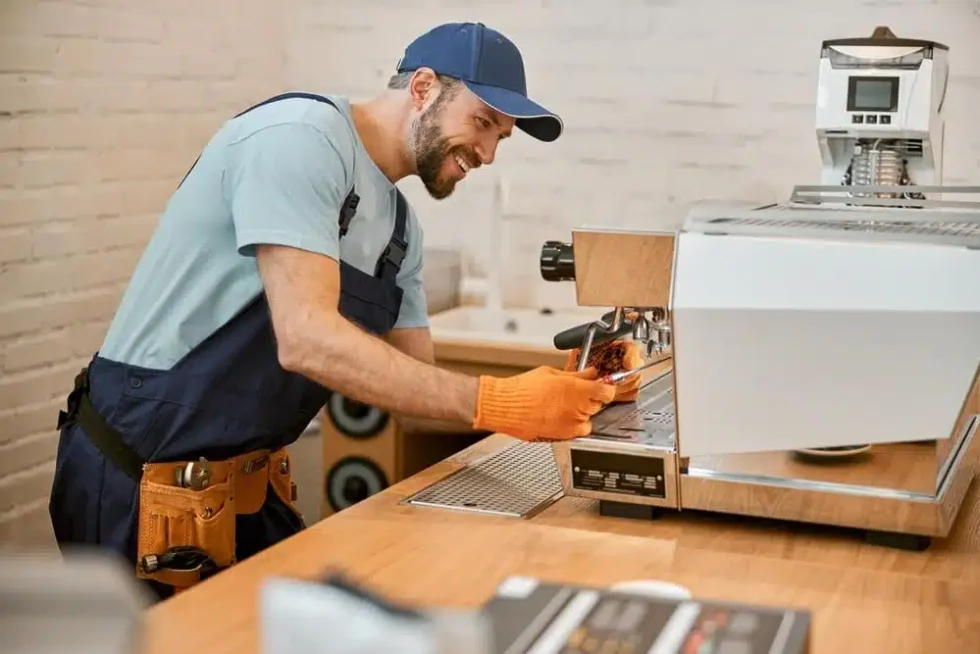
In Dubai, coffee culture is thriving—from bustling specialty cafés in Al Karama and Sheikh Hamdan Colony to busy corporate office pantries and home espresso setups. Yet, operating precision brewing equipment in the UAE presents unique environmental and operational challenges. Even high-end residential and commercial espresso machines can suffer premature wear, pressure loss, or sudden electrical faults if they aren’t maintained for local conditions.
Understanding how Dubai’s water profile, climate, and high-volume usage affect internal components helps you prevent unexpected breakdowns and extend the lifespan of your machine.
1. Hard, Mineral-Dense Water & Rapid Limescale Buildup
Water makes up roughly 98% of a brewed cup of coffee, and Dubai’s desalinated municipal supply contains dissolved minerals such as calcium and magnesium. When water is repeatedly heated to 90°C–96°C inside narrow thermoblock coils or brass boilers, those minerals precipitate out as hard limescale (calcium carbonate).
- Thermal Insulation & Element Burnout: Limescale coats heating elements like a thick crust, trapping heat and forcing elements to work overtime until they overheat and burn out.
- Choked Pipes & Solenoid Valves: Narrow copper lines, flow meters, and three-way solenoid valves gradually clog with mineral deposits, leading to sputtering extractions, weak steam pressure, and lukewarm shots.
- Pump Strain: When scale narrows internal waterways, vibration and rotary pumps must push against excessive backpressure, accelerating internal seal wear and motor failure.
2. High Ambient Heat & Thermal Stress on Seals and Electronics
Dubai’s warm ambient temperatures—especially in commercial kitchens, cafés near open storefronts, or apartments where AC is turned down while residents are away—compound the internal heat already generated by espresso boilers.
- Degraded Rubber Gaskets & O-Rings: Continuous exposure to high heat dries out silicone tubing, boiler O-rings, and group head rubber gaskets. Once rubber hardens and cracks, pressurized water leaks internally onto electrical wiring or sprays out around the portafilter.
- Control Board & Sensor Drift: Excessive ambient heat combined with poor cabinet ventilation stresses microprocessor control boards, solid-state relays, and NTC temperature sensors, triggering erratic brewing temperatures or unresolvable error codes.
3. Coastal Humidity & Fine Airborne Dust
Dubai’s coastal humidity and seasonal desert dust storms create two subtle mechanical hazards inside automatic and semi-automatic coffee machines:
- Clumped Coffee Oils & Grinder Jams: High indoor humidity causes fine coffee dust inside built-in burr grinders and dosing chutes to absorb moisture and cake onto steel burrs. Combined with oily dark-roast beans, this buildup jams burr carriers and strips plastic drive gears.
- Dust-Clogged Cooling Vents & Moisture Condensation: Fine airborne dust settles on internal circuit boards and ventilation slots. When combined with humid air or minor steam leaks, dust retains moisture against PCB traces, leading to short circuits and tripped breakers.
4. High Daily Extraction Volumes Without Routine Backflushing
In Dubai’s fast-paced offices and hospitality venues, machines are often pushed through back-to-back extractions from early morning until late at night.
- Rancid Coffee Oil & Tannin Buildup: Without daily water backflushing and weekly detergent cleaning, sticky coffee oils bake onto shower screens and group head valves, causing bitter flavors and stuck plungers.
- Blocked Milk Frothing Circuits: Dairy proteins bake almost instantly inside steam wands and automatic milk frothers if not purged and wiped after every single use, leading to weak froth and bacterial buildup.
5. Power Fluctuations and Surge Sensitivity
Modern coffee makers rely on sensitive electronic logic boards, digital displays, and precision flow meters. Brief voltage spikes or power dips—especially in busy commercial buildings running heavy HVAC and kitchen loads simultaneously—can blow internal thermal fuses or damage main PCB boards.
How to Protect Your Coffee Machine in Dubai
| Preventative Habit | Recommended Frequency | What It Prevents |
|---|---|---|
| Use Filtered or Remineralized RO Water | Every tank refill / plumbed filter change | Limescale buildup in boilers, valves, and pumps |
| Purge & Wipe Steam Wands | Immediately after every use | Dried milk blockages and low steam pressure |
| Backflush Group Head & Clean Brew Unit | Daily (water) / Weekly (detergent) | Rancid coffee oils, stuck solenoids, and jammed infusers |
| Descale Internal Water Circuits | Every 1–3 months (based on usage) | Heating element burnout and slow water flow |
| Professional Servicing & Gasket Replacement | Every 3–6 months (commercial) / Annually (home) | Sudden leaks, pump failure, and pressure drops |
Need Expert Coffee Machine Repair in Al Karama or Across Dubai?
If your espresso maker is leaking water, struggling to heat, making unusual grinding noises, or failing to build pressure, Al Karama Technical Services is ready to help. Located in Sheikh Hamdan Colony – Dubai – United Arab Emirates, our certified technicians repair all major residential and commercial coffee machines—including De’Longhi, Breville, Jura, Saeco, Gaggia, Krups, La Marzocco, and Nuova Simonelli.
Explore our services or visit our dedicated coffee machine repair for fast diagnostics. To schedule a same-day technician visit, contact us at +971 56 406 2749 or email [email protected].
Leave a Reply