A washing machine flood in a Dubai apartment is a serious household emergency. Because apartment units are stacked, a major appliance leak does not just ruin your own flooring—it can quickly seep into the ceiling of the unit below you, leading to extensive property damage and costly repair bills.
Fortunately, washing machines rarely suffer catastrophic failures without warning. If you know what to look for, you can catch mechanical issues before they turn into a flood. Here are the five most common warning signs that your washing machine is on the verge of a major leak.
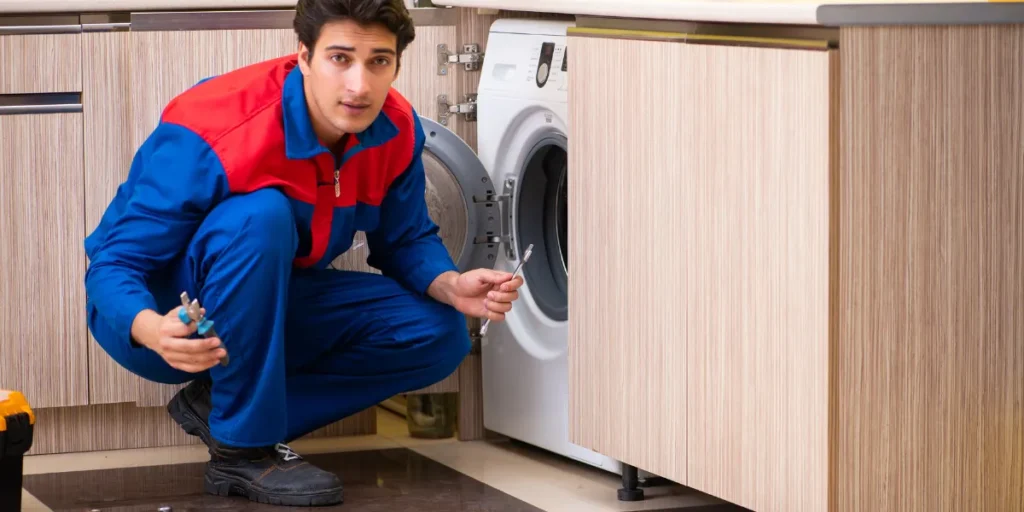
1. Small Puddles and Unexplained Leaks
What do small puddles around a washing machine mean? Small puddles or dried water stains around the base of your washing machine indicate a failing internal seal, a cracked water pump, or a loose hose connection.
Never ignore a minor leak. While it might seem like a harmless splash, a slow drip is often the first symptom of a weakened component. When this compromised part is subjected to the high water pressure of a full wash cycle, it can suddenly rupture. If you cannot identify the exact source of a puddle, it is highly recommended to arrange a professional home appliance repair inspection before using the machine again.
2. Bulging or Cracked Water Supply Hoses
Why do washing machine hoses burst? Washing machine hoses burst because traditional rubber degrades, hardens, and cracks over time due to constant exposure to high water pressure and temperature fluctuations.
A burst supply hose is the leading cause of washing machine floods. To prevent this, pull your machine away from the wall and inspect the hot and cold water hoses. Look for blisters, bulging sections, or dry rot. According to the Insurance Institute for Business & Home Safety (IBHS), homeowners should inspect these hoses annually and replace them every five years to prevent sudden catastrophic water damage. Upgrading to braided stainless steel hoses is one of the best preventative measures you can take.
3. The Washing Machine Overfills During a Cycle
Why won’t my washing machine stop filling with water? A washing machine will not stop filling if the water inlet valve gets stuck in the “open” position or if the pressure switch (water level sensor) malfunctions and fails to signal that the drum is full.
If you own a front-loader, keep an eye on the water level through the glass door. If the water rises higher than normal, stop the cycle immediately. If a faulty inlet valve fails completely, water will continue to pump into your apartment even after you have unplugged the machine, causing a rapid and severe flood.
4. Violent Shaking During the Spin Cycle
Can a shaking washing machine cause a flood? Yes, violent shaking can cause a washing machine to physically walk across the floor, which can rip the water supply hoses directly out of the wall valves or detach the drain hose from the plumbing.
While some vibration is normal, aggressive banging means the machine is unbalanced, the shock absorbers have worn out, or the drum bearings are failing. This extreme motion puts massive physical strain on all external water connections. If your machine is shaking dangerously out of control, you need immediate washing machine repair to secure the drum and protect your plumbing.
5. A Degraded or Moldy Door Seal
How does a damaged door seal cause a washing machine to leak? A damaged door seal compromises the watertight barrier of a front-loading washing machine, allowing the high-speed sloshing of water inside the drum to push directly through the gaps and onto your floor.
Over time, this thick rubber gasket is broken down by harsh detergents, hard water limescale, and general wear. Inspect your door seal closely for tears, stretching, or heavy mold buildup that prevents the glass door from closing flush against the rubber.
How to Prevent Washing Machine Floods in Your Apartment
If you notice any of these warning signs, you must act quickly to protect your property. First, locate the hot and cold water valves on the wall behind your machine and turn them off immediately. Do not attempt to run “just one more load,” as this is often when the final component break occurs. Review your appliance’s condition and consider exploring professional maintenance services to catch hidden wear and tear before it becomes a disaster.
When Should You Call a Washing Machine Repair Technician?
You should call an expert when your washing machine leaks, overfills, shakes violently, or displays error codes you cannot resolve. DIY fixes on high-pressure water systems are risky in apartment buildings. For fast, reliable service, trust the experts at Al Karama Technical LLC. Our technicians provide comprehensive appliance diagnostics and repairs across Dubai to keep your home safe and dry.
Frequently Asked Questions
Why is my washing machine leaking from the bottom?
A washing machine leaking from the bottom usually has a cracked internal water pump, a damaged tub seal, or a loose internal drain hose. This requires a technician to open the machine’s casing for an accurate diagnosis.
How often should I replace washing machine hoses?
You should replace standard rubber washing machine hoses every five years. If you upgrade to braided stainless steel hoses, they offer superior durability and resistance to bursting.
What should I do if my washing machine won’t stop filling?
If your machine won’t stop filling, immediately turn off the hot and cold water supply valves on the wall behind the unit. Then, unplug the machine to stop the electrical current to the water inlet valve.
Can a blocked drain filter cause a flood?
Yes, a severely blocked drain filter can cause water to back up and overflow from the machine, or force water out through the door seal due to poor drainage during the spin cycle.
When do I need professional washing machine repair in Dubai?
You need professional repair if your machine is leaking, failing to drain, making loud grinding noises, or shaking violently. You can contact us at Al Karama Technical LLC for expert appliance inspection and immediate repairs in your Dubai apartment.
Leave a Reply